Shopping
·
The Art of the Flea Market
On hunting for pieces with a past.
The most loved pieces in a home are often the ones no one else could buy: a worn stool, a chipped pitcher, a mirror that has reflected a century of rooms. Flea markets are where those pieces wait.
A few habits make the hunt far more rewarding.


Arrive early, and walk the whole market once before buying anything. The first pass is for looking; the second is for deciding. Carry a tape measure, photographs of your rooms and a clear sense of the scale you need.
Look past finish to form. Paint can be stripped and fabric replaced, but good proportions and honest joinery are rare.

Old brass, tarnished to a soft glow

Small curiosities, waiting
Patina is the point. A little wear tells the story of a piece and softens a room of new, precise surfaces. The aim is never a themed interior, only a few objects with history, placed with care.
Buy what you love, then find its place. The most interesting rooms mix periods and materials: a rush-seat chair beside a contemporary table, a folk-art bowl on a honed stone counter.
And always ask where a piece has been. Knowing its story makes living with it all the richer.


Mutton Street, Mumbai

Tools, toys and odd bits of iron
–
The details are not the details. They make the design.
— Charles Eames
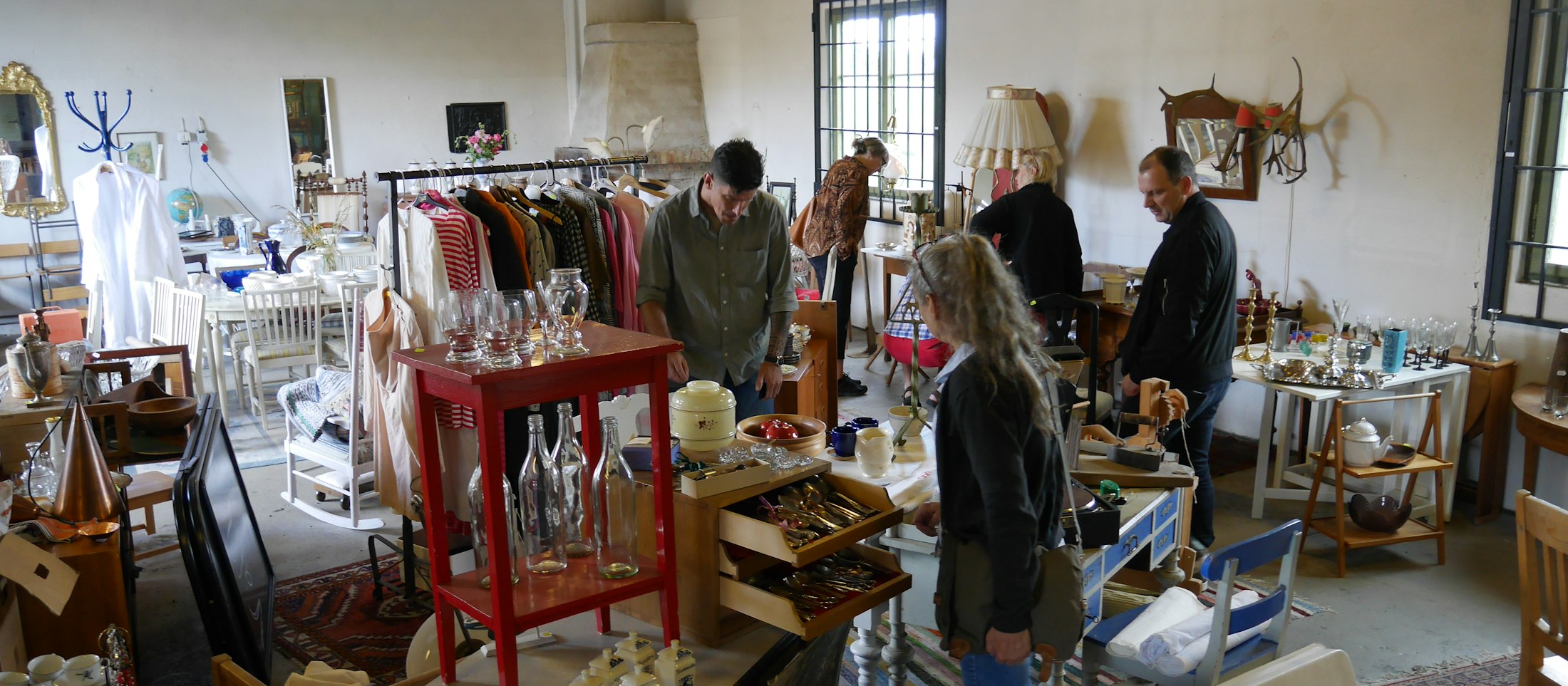
Treat each find as a beginning, not a finishing touch. The right piece will quietly change the room around it.