Design Insights
·
Designing with Layers of Light
Why every room needs more than one kind of light.
Light is the first material we consider in a room, and the one most often left until last. It shapes how colour reads and how texture feels, and it changes a space from hour to hour.
The secret is layering: no single source should have to do all the work.


Begin with ambient light, the soft, general glow that lets you move through a room. Add task light where hands are busy: over a counter, beside a reading chair, at a desk.
Then add accent light to draw the eye: a wash across a textured wall, a beam on a piece of art, a lamp glowing low in a corner.
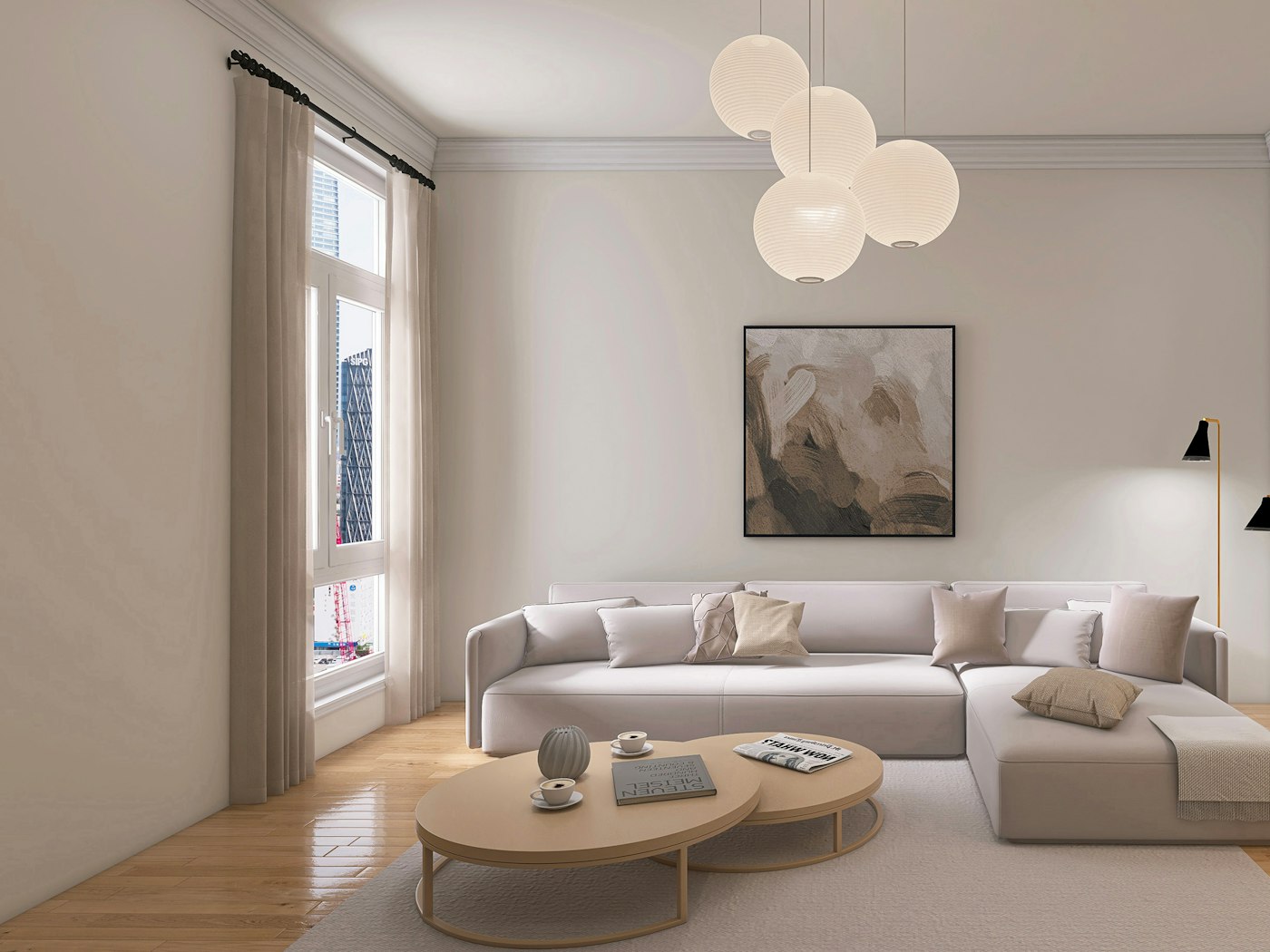
Glass globes over a low, pale room

Daylight carried deep into a quiet room
Warmth matters. In living spaces we favour warm white light, around 2700 kelvin, and dimmers wherever possible, so a room can move from bright and practical to low and intimate.
Daylight deserves the same care. Sheer linen softens hard sun without shutting it out, and pale, matte surfaces carry light deeper into a room.
Notice where the sun falls through the day, and let it decide where you sit, read and gather.


Afternoon light across a dark wall

A square of sun, moving by the hour
–
Architecture is the masterly, correct and magnificent play of masses brought together in light.
— Le Corbusier

A well-lit room rarely announces itself. It simply feels right, from the first light of morning to the last lamp at night.