The Edit
·
The Beauty of the Mend
Kintsugi, boro and the quiet art of repair.
In Japan, a broken bowl is not always the end of a bowl. With kintsugi, “golden joinery”, a crack is mended with lacquer and dusted with powdered gold, so the break becomes the most beautiful part of the piece.
It is one of several traditions of repair that we keep returning to.


The work is slow. Each fragment is rejoined with urushi, the sap of the lacquer tree, and left to cure between thin layers; only at the end is the seam dusted with gold. A single repair can take weeks.
The result does not hide its history. It wears it, like a line on a map.

A glazed bowl, its crack traced in gold

Seams of gold, catching the light
The same spirit runs through boro, the patched indigo cloth of northern Japan. Where cotton was scarce, families mended their clothes and bedding for generations, layering scraps with sashiko, a simple running stitch, until a single cloth carried the hands of several lifetimes.
There is a Japanese word, mottainai, for the regret of wasting something that still has value. Mending is that idea made visible, and it asks a good question of any room: what here will be more beautiful in twenty years?
We think of it when we leave brass unlacquered, choose oak that will soften underfoot, or specify linen that relaxes with every wash.
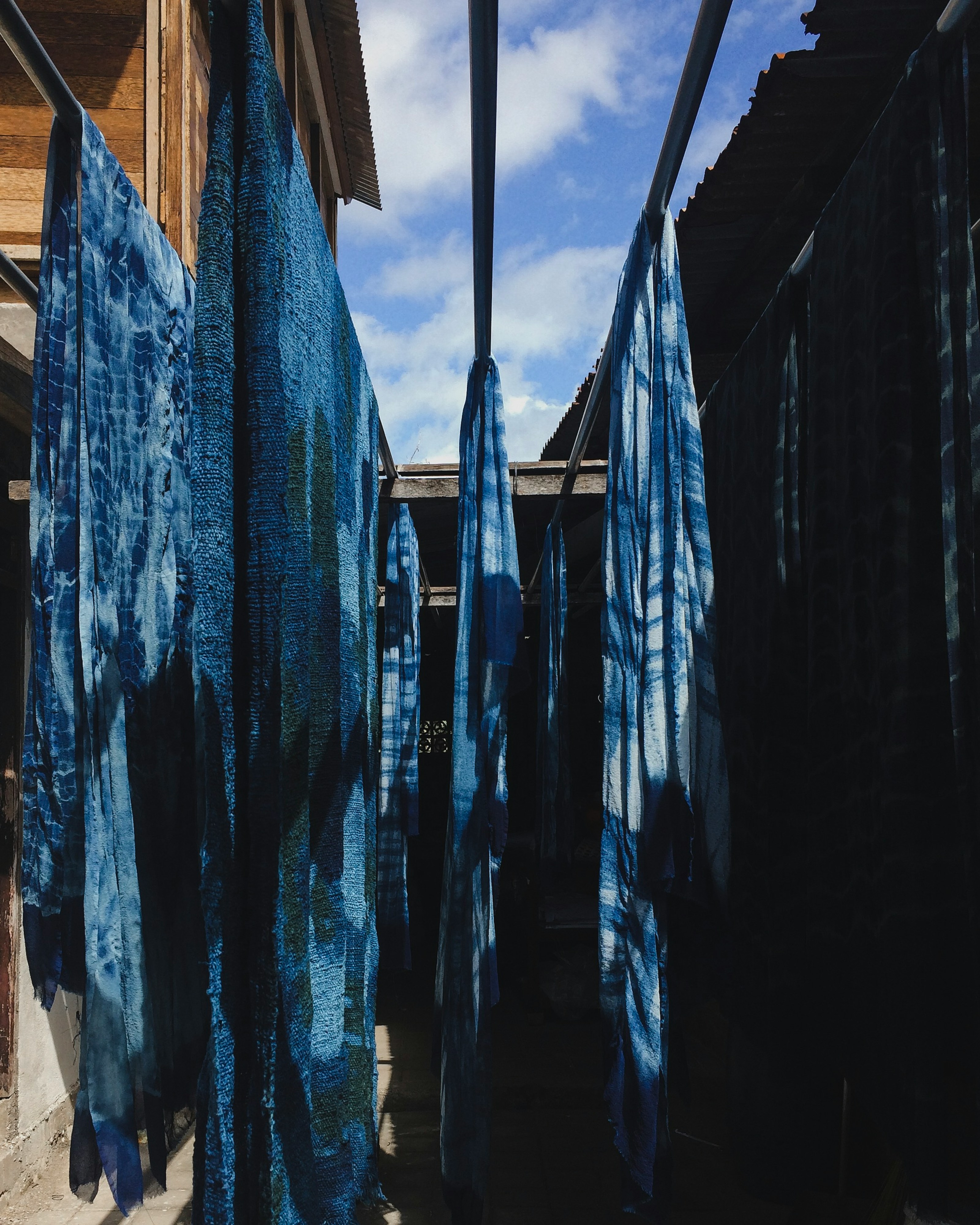

Indigo cloth, deepened by the dye and softened by light

Yarn lifted from the dye vat
–
We do prefer a pensive luster to a shallow brilliance.
— Jun’ichirō Tanizaki, In Praise of Shadows

A home should be allowed to wear in, not out. Keep the chipped bowl, and have it mended beautifully.